
Santurantikuy is a traditional Christmas fair declared Cultural Heritage of the Nation on September 22, 2009. It takes place every December 24 in Cusco’s Main Square, where artisans and sculptors display their works following the tradition of ancient Andean fairs. More than a commercial space, it represents part of Cusco’s spirit, tradition, art, and popular devotion.
Let’s begin with a little of its incredible history. “Santurantikuy” is a blend of Spanish and Quechua words that translates as “sale of saints.” Just like its name, Santurantikuy is a complex process of cultural synthesis between the Andean world and colonial Europe.
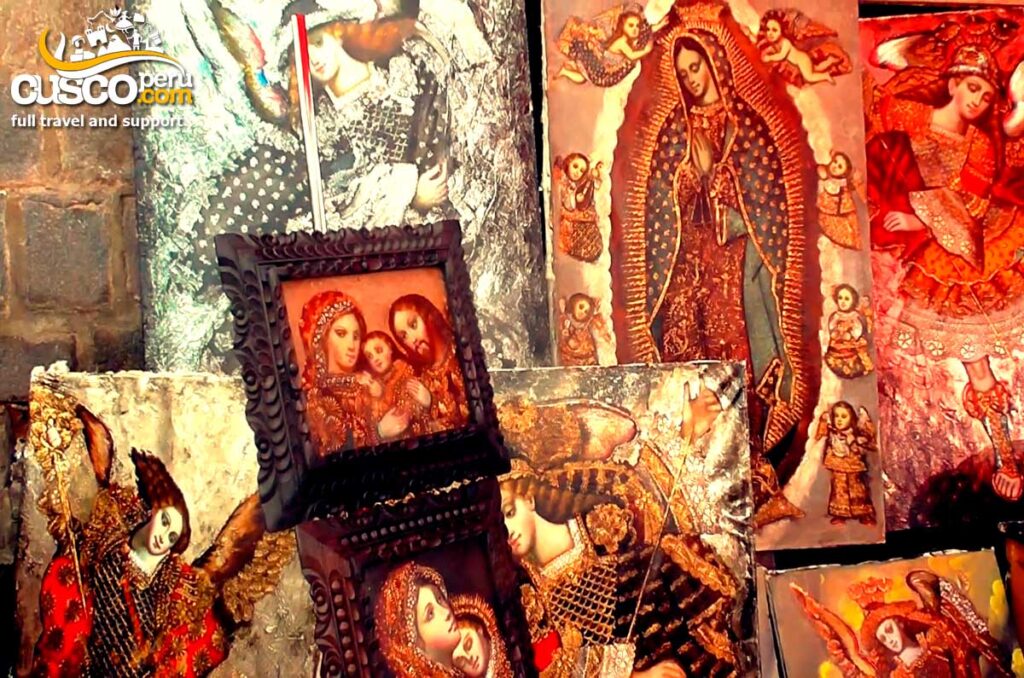
There is no clear date for the beginning of this celebration. It is said to have originated in the 16th century, while the oldest written reference related to Santurantikuy dates back to 1834, although it was not called by this name. Despite this mystery, what we know for certain is that Santurantikuy was a Spanish creation from the colonial period, imposed as a way to evangelize the Indigenous people of Peru. As its name suggests, images of Catholic saints have been sold since ancient times on the steps of Cusco Cathedral.
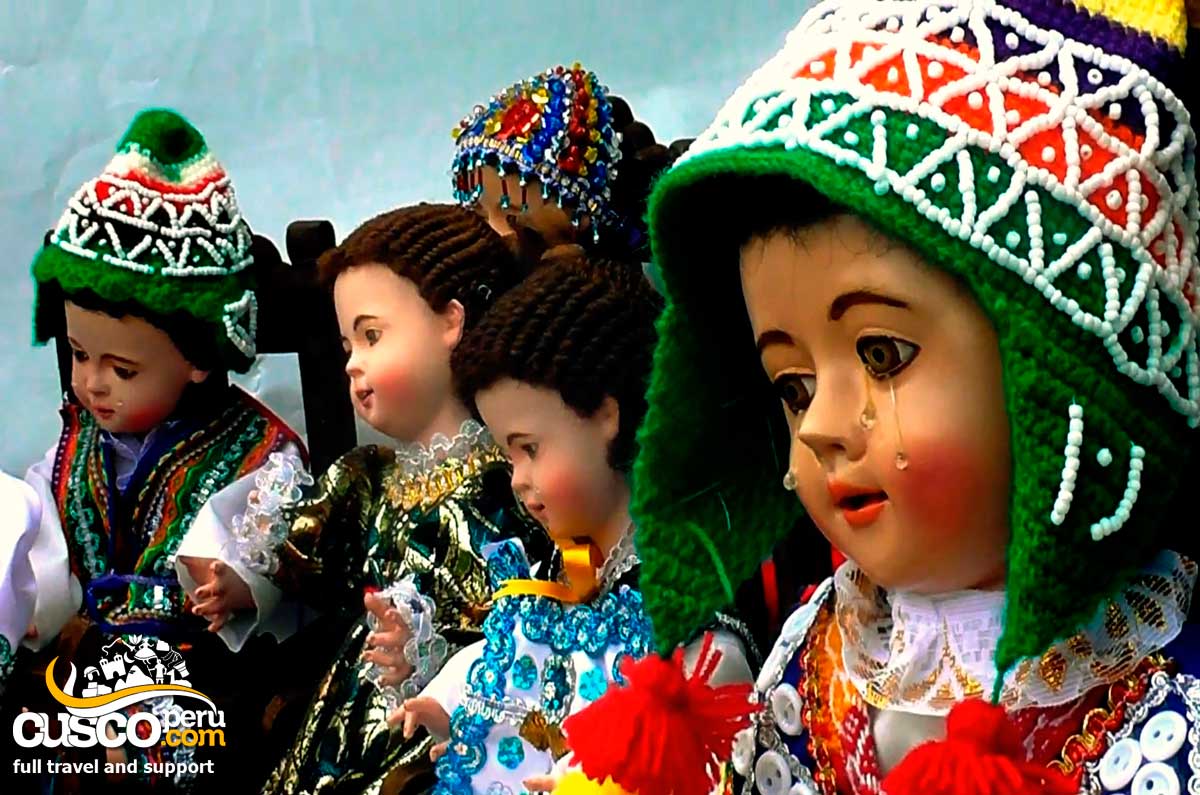
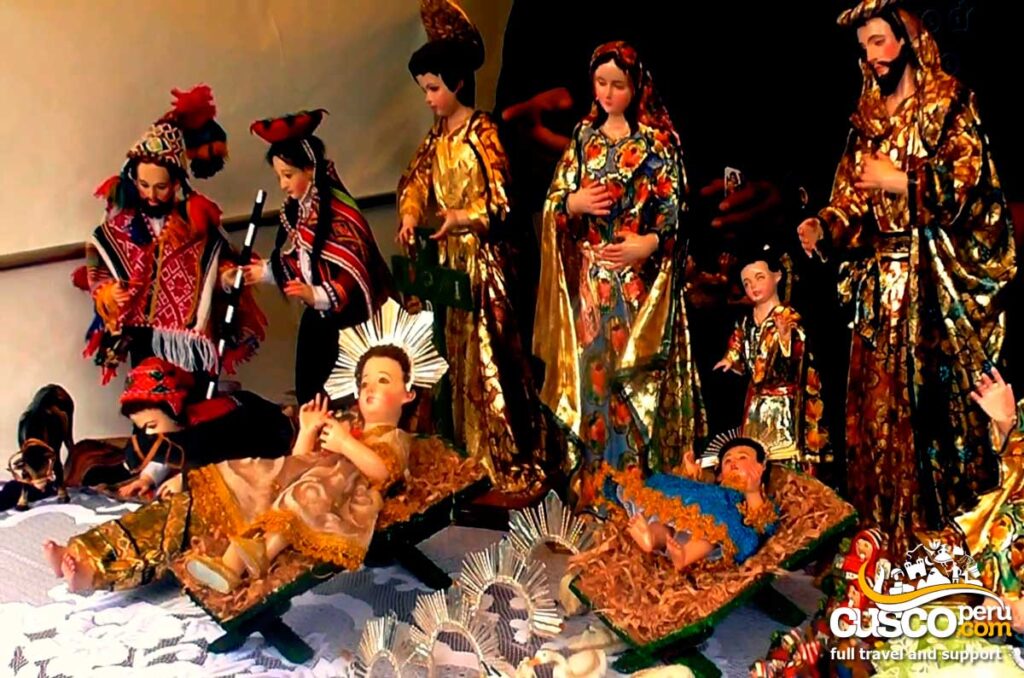
Among the saints that were offered then, and are still offered today, the main figure is the “Niño Manuelito.” He is none other than Baby Jesus. The name Manuelito comes from a tender variation of “Emmanuel,” another name for Baby Jesus in Catholic tradition, which in Peru became Hispanicized as Manuel.
The people of Cusco adopted the concept of Niño Manuelito as their own to such an extent that they dressed him as an Inca king. This practice began with the Jesuits and caused outrage within the Catholic Church. Today, Niño Manuelito remains a beloved and deeply local figure for the people of Cusco, especially during the Christmas season. At Santurantikuy, visitors can find hundreds of images and sculptures of Niño Manuelito in different sizes and designs. The best-known and most valued design for its refinement is the one created by Antonio Olave Palomino, who designed the first Niño de la Espina, or Niño Manuelito, more than 40 years ago. The Cusco artist based his work on an oral tradition from Vilcabamba.
Niño Manuelito is extremely important to the men and women of Cusco. He always decorates traditional nativity scenes, and every year it is customary to buy new clothes for him. The ideal place to find a new outfit for Niño Manuelito is, of course, Santurantikuy, where clothing can be found in different sizes and a wide variety of designs, some traditional and others playful and innovative.
Now that you know a little about the extensive and complex history of Santurantikuy and its main figure, let us tell you about all the wonderful works you will see at the fair. There is so much variety and so many unique products that you may need a bigger suitcase to take everything home!
Let’s start with the traditional items: at Santurantikuy, everything needed to set up a Christmas nativity scene is displayed. And we are not only talking about beautiful mangers with the figures of Saint Joseph, the Virgin Mary, and Baby Jesus. In Cusco, nativity scenes can include entire towns that may take up a whole room.

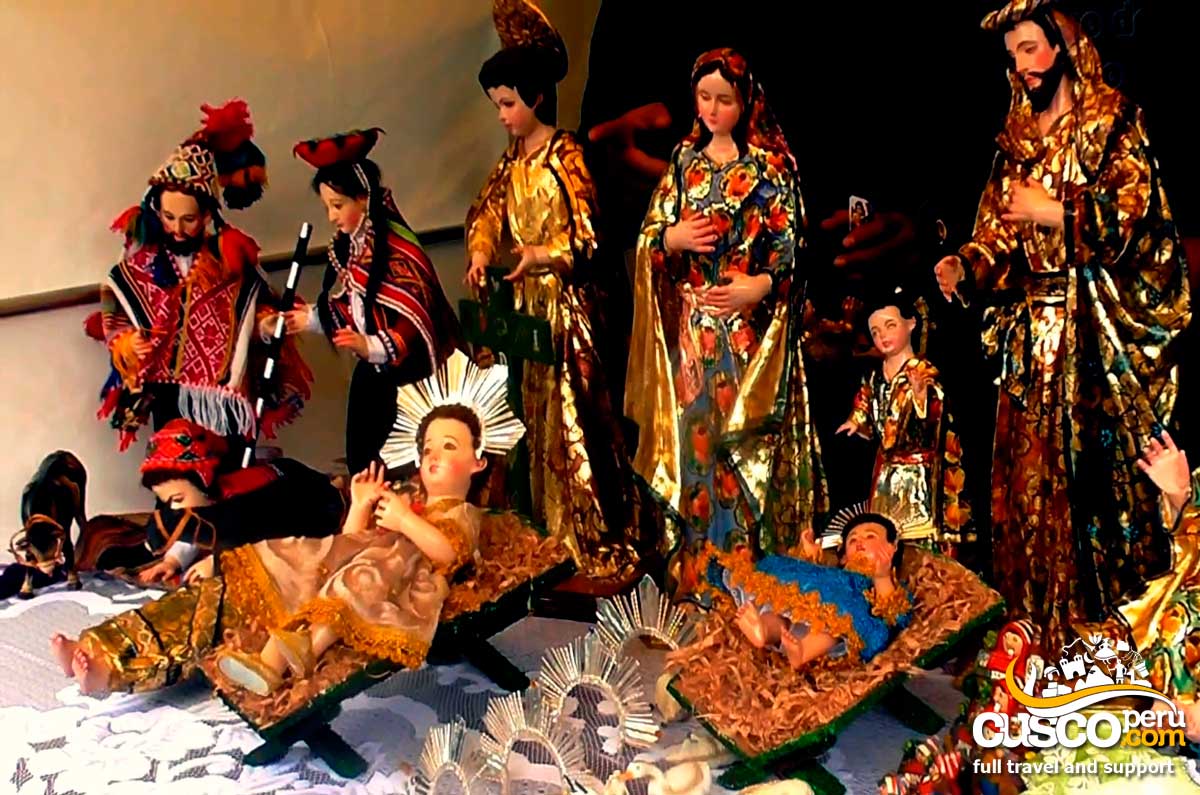
You will see and be able to buy figures of all kinds of animals, even the most unexpected ones, made in different materials, designs, and styles; miniature bridges, houses, and water wells with fine finishes. These small and beautiful sculptures are worth admiring even if you do not plan to set up a nativity scene. You can take them home to decorate your house or perhaps surprise a friend with a miniature of their favorite animal brought from Cusco.
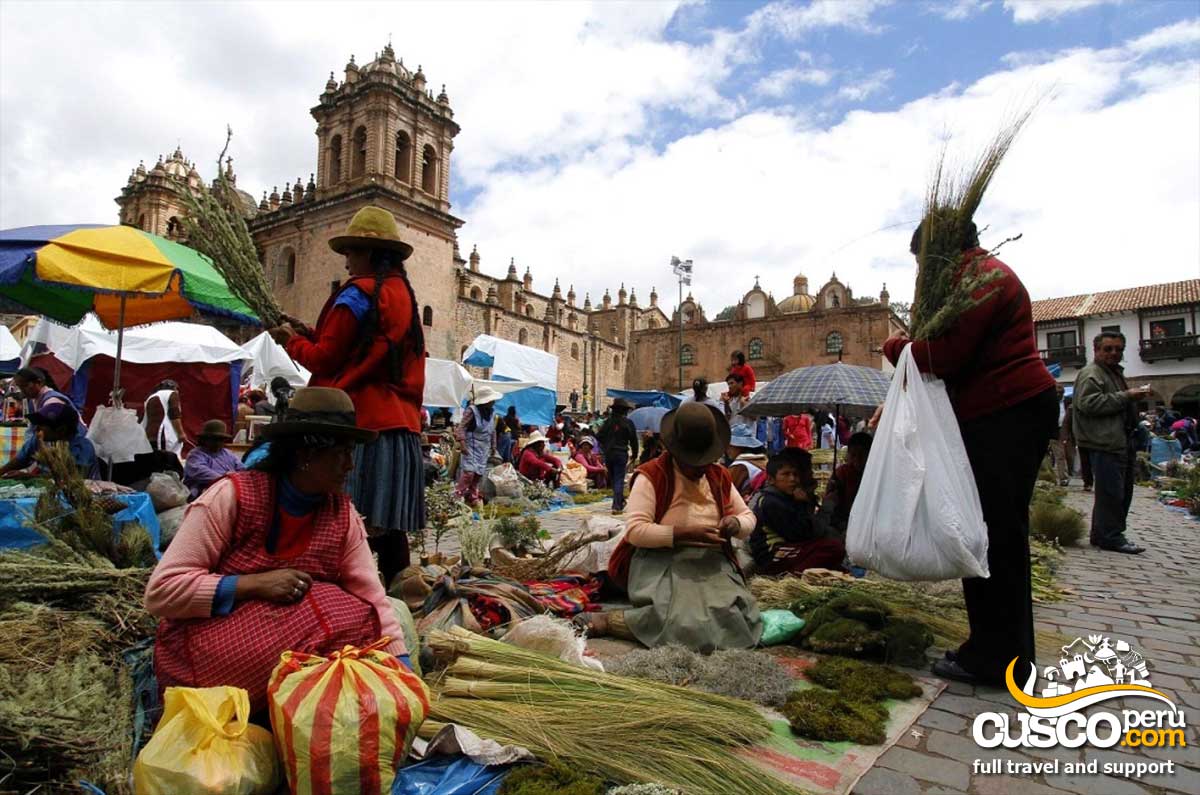
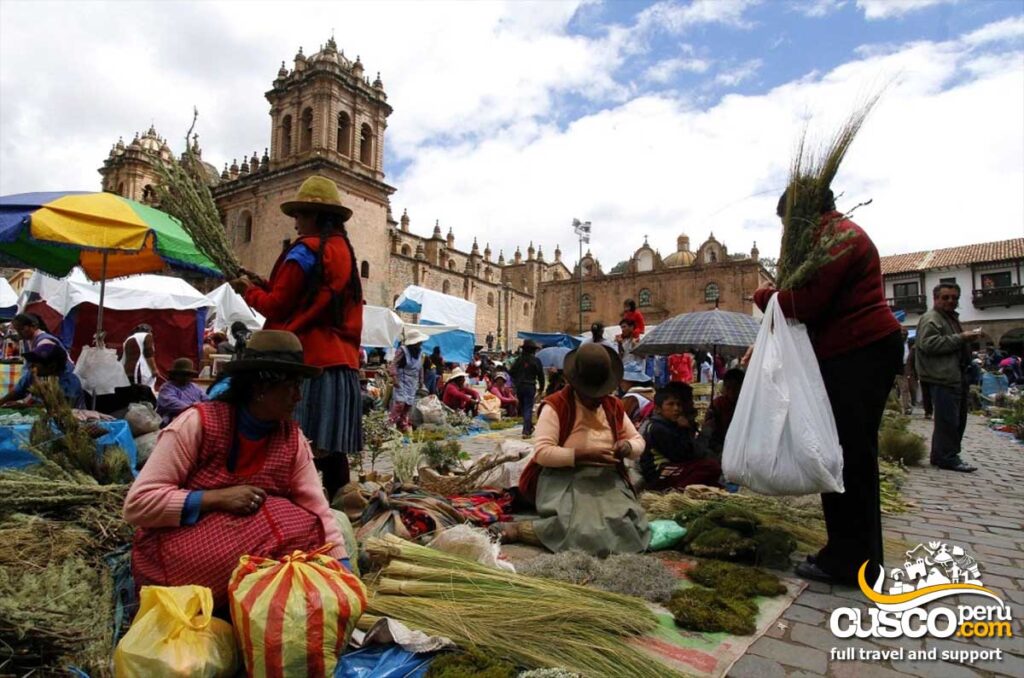
In a nativity scene worthy of the contest organized every year by EMUFEC, the Municipal Festivities Company of Cusco, everything matters: not only the characters that decorate it, but also the space where they are placed. To add these details, the so-called “hierberas” arrive from the high provinces of Cusco to offer different herbs brought from their own communities.
They are entire Quechua-speaking families of very humble means who come to the city for a couple of days to sell their herbs at very low prices. Most of them do not have a place to spend the night and stay with their children under the arcades of the Plaza de Armas, which offer very little shelter from the cold and rain. There are several initiatives that support them during the days leading up to Christmas, days that for them mean sacrifice and working all day long. Many organizations and institutions offer them hot chocolate, panettone, and gifts for the children. There is also the volunteer group Caravana Cusco, whom you can recognize by their colorful clown costumes. These young people from Cusco offer their time and affection to the children who arrive in the city and, throughout the morning, play, sing, and perform mime, theater, and storytelling shows. Do not overlook these families; they offer their herbs near the Santa Catalina entrance to the square.
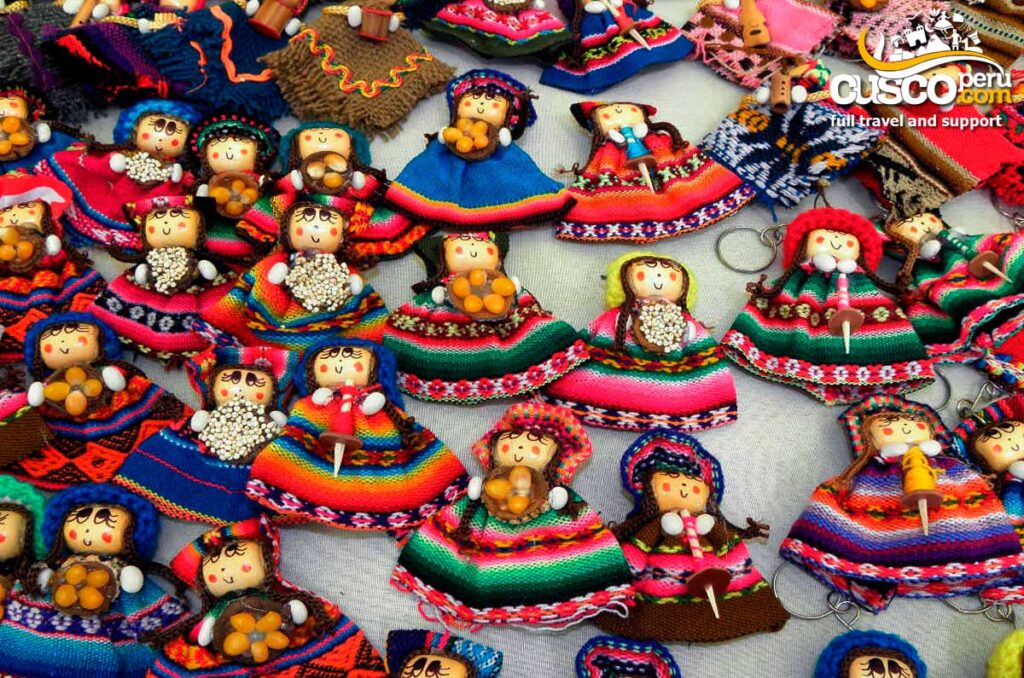
At Santurantikuy, you can buy unique clothing and all kinds of very original garments, such as T-shirts and blouses with designs inspired by Andean, Amazonian, or simply artistic themes; curious handwoven chullos that go beyond the ordinary, with llama ears, cat ears, and more. And speaking of magical beings, do not miss the puppets and dolls of playful elves and fairies, lamps shaped like miniature circus tents, paintings by renowned artists of the Cusco school —if you are lucky, you may take home a work by Mendivil or Olave— or pieces by young emerging artists.
If you are looking for delicate and sweet decoration, dried flower arrangements may be perfect for you, as well as accessories such as headbands and hair clips decorated with flowers crafted in leather. The colorful candles will also catch your eye.
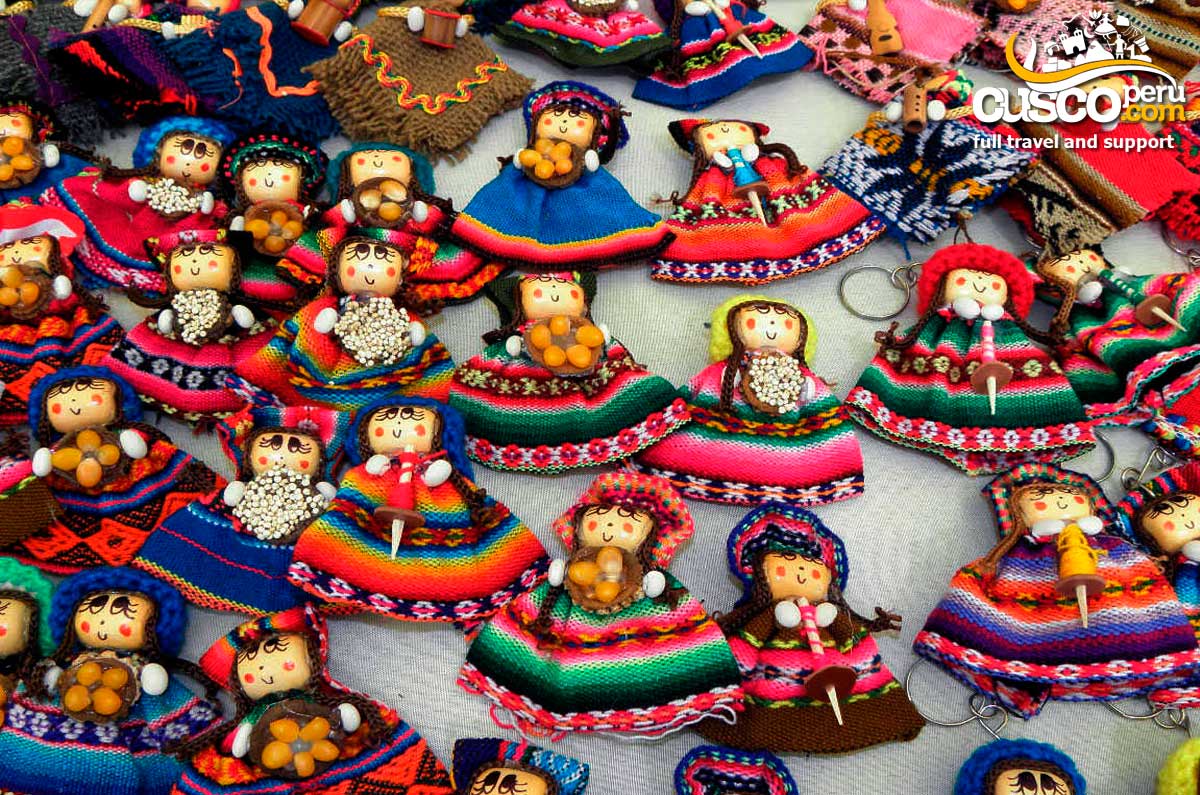
Let’s talk about materials. Santurantikuy offers all kinds of leatherwork, from belts to backpacks, silverwork worthy of Inca nobility, and woodwork so finely crafted that you may find yourself wondering how to take a chest of drawers with you on the plane. And if you have children or want to fill your home with joy, ask about the colorful wooden trucks that can become a favorite toy or an admired decoration. Or perhaps a creative shelf?
We know that is the last thing you want, and we are happy to tell you that since 2015, the fair has extended beyond the traditional December 24 date to include December 23 and 24. Two days to explore everything, or to make a short trip coincide with the event.
You now know how special this fair is, but keep in mind that it brings together the entire city and creates a lot of movement. Do not let this overwhelm you. To make things easier, be sure to consider the 6 tips we have shared in this article.
Santurantikuy is celebrated every year on December 24.
On Christmas Eve, Cusco’s Plaza de Armas is transformed to welcome Cusco artisans, sculptors, and religious image makers, who display their best works at this unique Christmas fair that every year gathers and delights hundreds of locals and tourists.


Happy passengers